CIOReview APAC Weekly Brief
Be first to read the latest tech news, Industry Leader's Insights, and CIO interviews of medium and large enterprises exclusively from CIOReview APAC
A featured contribution from Leadership Perspectives: a curated forum reserved for leaders nominated by our subscribers and vetted by the CIOReview Advisory Board.

PT. Gunanusa Eramandiri Tbk [IDX: GUNA]
Empowering Generations: The HR Transformation Driving Cultural Change
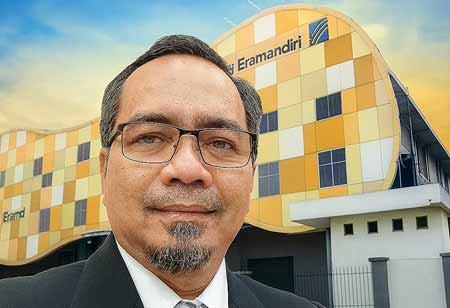
Rachmat Setyawan
With over 24 years of experience across manufacturing, retail, construction, and healthcare, Dr. Rachmat Setyawan, has led HR transformations, particularly in the manufacturing sector. His leadership style is shaped by a blend of diverse professional experiences, continuous learning, formal education, and leadership development programs. A key turning point in their career was leading transformations in company culture, performance management systems, talent management, and digital HR systems. These experiences have taught him that true transformation goes beyond systems and tools—it’s about reshaping mindsets, behaviors, and how individuals approach work, collaboration, and organizational growth with empathy, purpose, and strategy.
What does it take to truly transform an organization—new tools, new structures, or something deeper?
At PT Gunanusa Eramandiri Tbk, we’ve discovered that real change begins with reshaping mindsets and embedding culture, supported by the right digital innovations. This belief has become the foundation of our journey to build a future-ready HR that empowers every generation in our workforce.
Currently, at PT Gunanusa Eramandiri Tbk, I have the privilege of driving transformation holistically—across strategy, structure, systems, people, and culture. As a newly public company, we are laying the foundation for our future direction by answering fundamental questions: Where are we heading? Why do we exist? What kind of culture will take us there? These questions anchor the transformation strategy, ensuring alignment with both business and cultural needs.
Cultural Integration and Alignment for Organizational Success
At PT Gunanusa Eramandiri Tbk, we’ve anchored our transformation around our core values—Grit, Unity, Noble, and Agile (GUNA) - which we embedded not only in daily behaviors but also into our Performance Management System. These values are measured and rewarded through our promotion criteria and serve as the basis for talent reviews and development planning. The implementation of a structured promotion system and strategic talent management framework ensures that we prepare future leaders aligned with both business needs and cultural integrity.
“Employee engagement is not a one-size-fits-all approach—it requires adaptability to different age groups, values, and ways of working.”
Company culture / values play a vital role in sustaining long-term business success. At PT. Gunanusa Eramandiri Tbk, to embed these values, we’ve implemented multiple strategies: making GUNA a key component in our Performance Management System, with a significant weight in evaluations; developing a behavior handbook to define clear expectations across all levels; running regular training sessions and weekly poster campaigns to reinforce awareness; and aligning company activities—such as national celebrations and corporate events—with our values to create emotional connection and relevance. By doing so, our culture becomes more than words—it becomes a shared standard and source of strength, especially during times of change. This integration fosters a strong organizational identity, which is key to maintaining momentum during periods of transition or growth.
Challenges in HR Alignment and Employee Engagement
One key challenge is aligning diverse business units under a unified people strategy, especially given our multi-entity structure. To address this, we have developed integrated frameworks for KPIfocused performance management, training and development, and employee engagement and experience. While these frameworks provide a consistent structure across the organization, they are designed to be adaptable, allowing each business unit to tailor the implementation in a way that aligns with its unique culture. This balance ensures both unity and individuality, enabling all units to move towards shared organizational goals without losing their distinct identity.
Another challenge is strengthening employee engagement across generations. We’re tackling this through digital HR initiatives, leadership upskilling, and purposeful culture programs centered on our GUNA values. I believe consistency, listening, and data-driven HR are critical to overcoming these challenges. Employee engagement is not a one-size-fits-all approach—it requires adaptability to different age groups, values, and ways of working. Digital tools and data help us personalize and adapt our strategies to ensure we remain relevant to the diverse generations in our workforce.
To engage Gen Y and Z—who are highly digital, value transparency, and expect speed and autonomy—it’s essential that HR systems go beyond automation and truly enhance the employee experience. One key area is the digitalization of Performance Management Systems. By mapping KPIs from organizational to individual levels within a digital platform, we increase visibility and alignment. This allows employees to easily see, structure, and update their progress—fostering ownership and clarity, which are highly valued by younger generations.
Digital Transformation and Employee Empowerment
We also focus on continuous performance monitoring through digital tools. This includes structured one-on-one coaching sessions, weekly priority check-ins, and recognition platforms where appreciation can be shared instantly across teams— strengthening connection and motivation. These digital tools not only ensure continuous engagement but also allow for real-time adjustments in alignment with business goals and individual growth trajectories. This ongoing feedback loop is especially important to younger generations who seek real-time feedback and acknowledgment for their efforts.
In talent management, digital HR systems play a critical role in mapping each employee’s Human Asset Value (HAV), building structured succession plans, and enabling talent mobility. This gives both the organization and the individual a clear view of potential and growth pathways. We have also implemented a Learning Management System (LMS) to support self-directed learning, structured training programs, and real-time tracking of learning progress. This is crucial for younger generations who value flexibility, personalization, and continuous development. Additionally, we implement employee self-service tools that go beyond basic tasks like leave or overtime requests, including systems for digital recruitment requests and a chatbot to provide immediate support, enhancing responsiveness and accessibility.
Ultimately, digitalization in HR is not just about efficiency— it’s about creating a connected, empowering, and engaging experience for the next generation of the workforce. At PT. Gunanusa Eramandiri Tbk, we are actively driving this transformation—ensuring that our HR systems support not only operational effectiveness, but also a more meaningful, engaging, and future-ready employee experience.
Start by truly understanding the organization—its purpose, its people, and its pain points. Use tools to understand organization, like SWOT. Combine that insight with data, empathy, and design thinking to co-create solutions that are relevant and lasting. Never stop learning, and always listen—because transformation doesn’t happen in isolation; it’s built through trust, collaboration, and consistent effort.
